Prescription Drug Coverage Is Changing: Why Mail-Order Canadian Drugs Are Ending & What You Can Do
The FDA is shutting down personal importation of mail-order prescription drugs from Canada, and Medicare Part D is reshaping drug coverage for 2027. Here's what's changing, why it matters, and the real solutions that protect your wallet.
John Dennis, Theology MA, MBA, Biology BA — AliveInsure.com
Health, Medicare & Life Insurance Broker
We do not offer every plan available in your area. Any information we provide is limited to those plans we do offer in your area. Please contact Medicare.gov or 1-800-MEDICARE to get information on all of your options.
Not connected with or endorsed by the U.S. government or the federal Medicare program.
We represent Medicare Advantage organizations and standalone PDP prescription drug plans that have a Medicare contract. Enrollment depends on the plan's contract renewal. Calling (407) 815-0820 will connect you to a licensed sales agent. TTY: 711.
For years, millions of Americans crossed the border — or the internet — to buy prescription drugs from Canada at a fraction of U.S. prices. It was an open secret: the same medication, made by the same manufacturer, could cost 50–80% less just across the border. But that era is coming to an end. The FDA is tightening enforcement on personal importation, and the rules around mail-order Canadian prescriptions are changing in ways that will affect real people who depend on affordable medicine.
Why is this happening now? The FDA has long maintained that importing prescription drugs from other countries is technically illegal under the Federal Food, Drug, and Cosmetic Act, because the agency cannot guarantee that foreign-sourced medications meet the same safety, efficacy, and storage standards as drugs approved for the U.S. market. For years, the agency exercised 'enforcement discretion' for small personal quantities — essentially looking the other way. But rising concerns about counterfeit drugs, unregulated online pharmacies, and supply-chain integrity have led the FDA to crack down. Many Canadian online pharmacies that once shipped to U.S. addresses are being blocked, and customs seizures of mail-order medications are increasing.
What does this mean for you? If you've been ordering maintenance medications — statins, blood pressure drugs, diabetes medications — from a Canadian pharmacy by mail, you may find that your orders are delayed, refused, or seized. Some pharmacies have stopped shipping to the U.S. entirely. This isn't a scare tactic; it's the new reality of enforcement, and it's catching families off guard mid-refill.
At the same time, prescription drug coverage itself is shifting. Medicare Part D — the federal program that covers prescription drugs for seniors and people with disabilities — is undergoing significant changes. The $2,000 annual out-of-pocket cap that took effect under the Inflation Reduction Act is a genuine win for seniors, capping what you pay in a calendar year. But plan formularies (the list of drugs a plan covers) are changing every year, preferred pharmacies are shifting, and many plans are moving expensive brand-name drugs to higher tiers with bigger coinsurance. A plan that covered your medication affordably last year may not this year.
The danger is simple: if your Canadian mail-order supply dries up AND your insurance plan drops or downgrades your drug, you can be left paying full retail price — sometimes hundreds or thousands of dollars a month — with no warning. That's a financial emergency hiding in plain sight.
So what are the real solutions? Here's what I recommend to the families I serve:
1. Review your Medicare Part D plan every year during Open Enrollment (October 15 – December 7). Formularies change annually, and the cheapest plan for your specific medications this year may be different from last year. Don't auto-renew without checking.
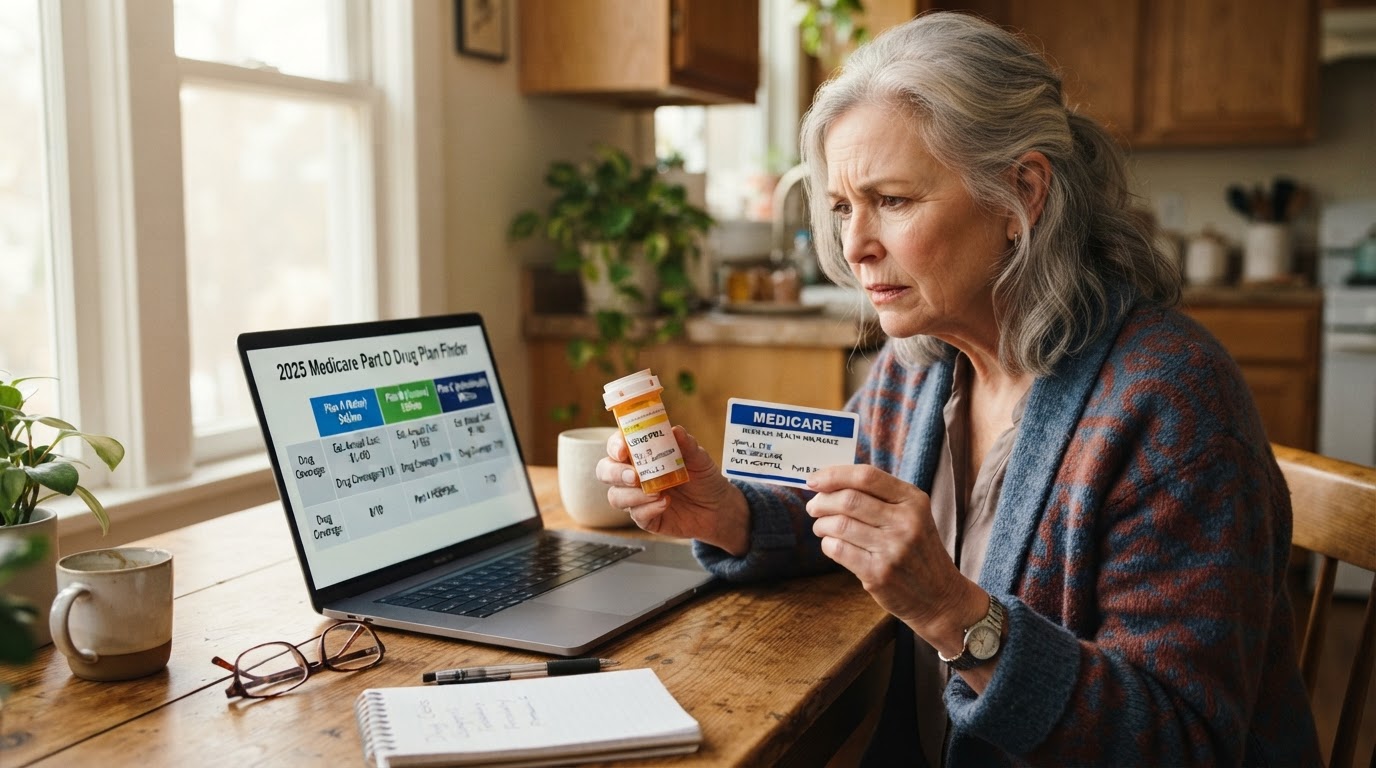
2. Use the Medicare Plan Finder at Medicare.gov to compare standalone Part D plans and Medicare Advantage plans with drug coverage side by side, based on your exact medication list and preferred pharmacy.
3. Ask your doctor about therapeutic alternatives. Many brand-name drugs have equally effective generics or lower-cost alternatives in the same class. A simple conversation with your prescriber can move you to a tier-1 generic that costs a few dollars instead of hundreds.
4. Use manufacturer copay cards and patient assistance programs. Most major drug manufacturers offer savings cards or free-drug programs for patients who qualify, especially for expensive specialty medications. Your pharmacist or broker can help you find them.
5. Consider a Medicare Advantage plan with built-in drug coverage and $0 or low copays for common generics, plus preferred pharmacy networks like Walmart, CVS, or mail-order pharmacies such as OptumRx or Express Scripts that offer 90-day supplies at a discount.
6. For those not yet on Medicare, check whether your ACA Marketplace or private plan's pharmacy benefit includes a preferred mail-order option with 90-day fills — often the lowest-cost way to get maintenance medications legally and safely.
7. If you're struggling to afford a specific medication, ask about GoodRx and other discount-card programs as a bridge — but understand these are not insurance and prices vary by pharmacy, so compare before you fill.
The honest truth: the days of relying on mail-order Canadian prescriptions as a long-term strategy are ending. The safer, more reliable path is to get your medications covered through a properly chosen insurance plan — and to review that plan every single year so a formulary change never catches you by surprise.
You don't have to figure this out alone. As an independent licensed insurance broker, I help families compare Medicare Part D and Medicare Advantage drug plans every Open Enrollment — at no cost to you. Call me at (407) 815-0820, compare plans through the link below, or book a free consultation and I'll review your medication list against every plan available in your area to find the one that keeps your costs lowest.
Ask a Question About this Article or Suggest an Article to Write
Have a question about what you just read, or an insurance topic you'd like John to write about next? Send it to John and he'll personally reply with expert, no-pressure guidance.
Compare Medicare Part D drug plans & save
Review your medication list against every Part D and Medicare Advantage plan available in your area, or book a free consultation with John Dennis to lock in the lowest-cost coverage before Open Enrollment ends.
Have questions about this topic?
Book a free, no-pressure consultation with John Dennis, independent licensed insurance broker.
Book an appointment